The Mannequin
Worldwide, 2012–present
Background
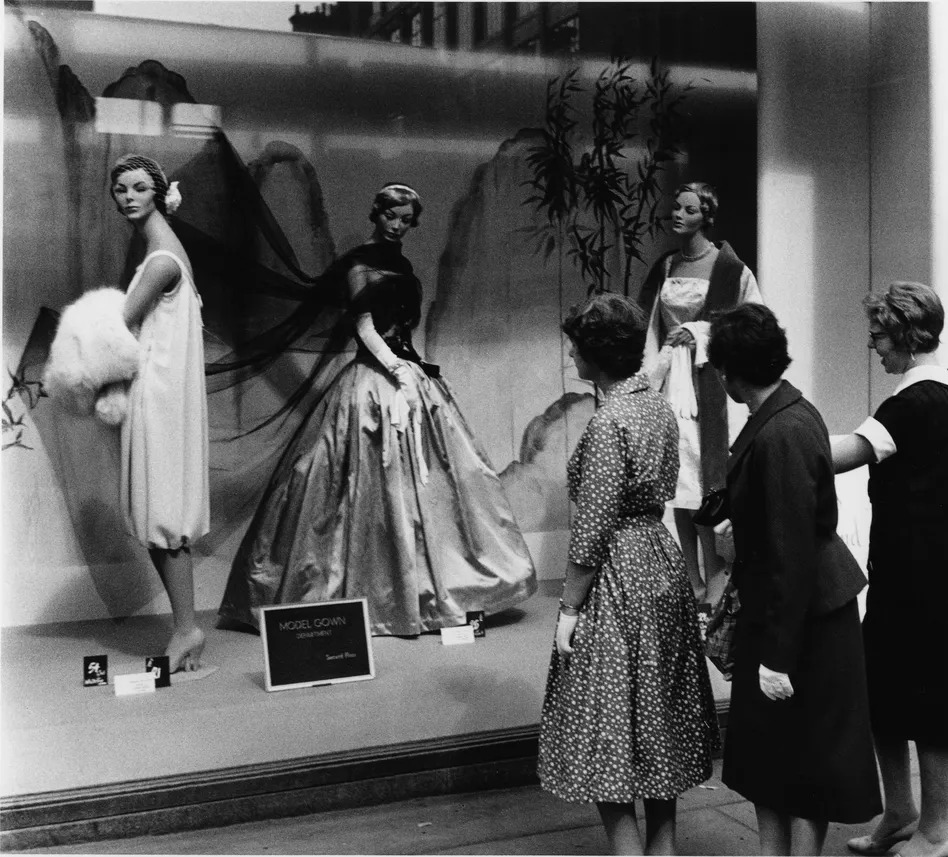
Mannequins are phenomena in window displays around the world, we walk past them on the streets comfortably, It is simply part of the pedestrian experience. And they have had their own evolution.
Early department store window figures around 1900 had solid wax heads and torsos, wooden arms and legs, with faces using glass eyes, real hair set into the scalp. A window figure in Macy's back then would be roughly $4,400 with inflation adjustment today.
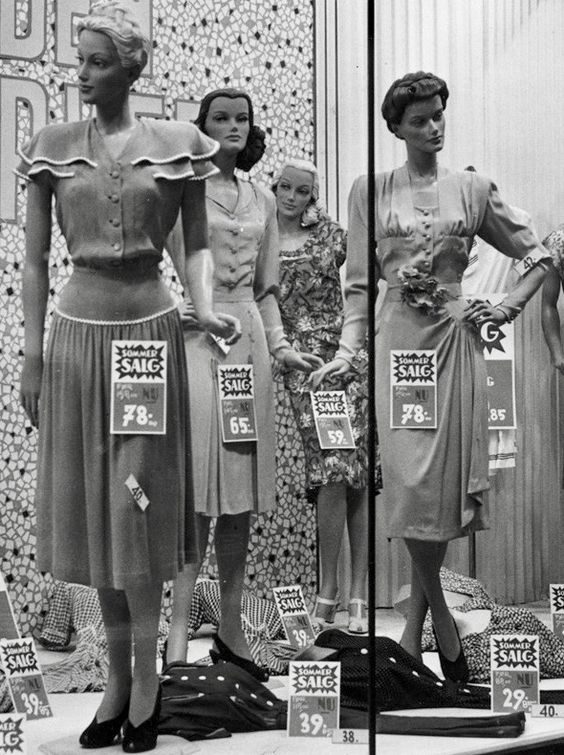
By the 1960s, mannequins were made from fiberglass. They were sculpted in clay and reproduced in bulk using glass cloth and resin. While the clay modeling was expensive, the mass production saved money and fiberglass was inexpensive, lightweight and durable.
Today's mannequin is often made from a digital body scan and the finished product has a featureless bald head to not draw attention away from the garments. A current factory mold is $1,000 to $2,000, which works out to about $25 to $50 a copy over a run of forty. A typical fiberglass mannequin weighs 15 to 30 pounds.
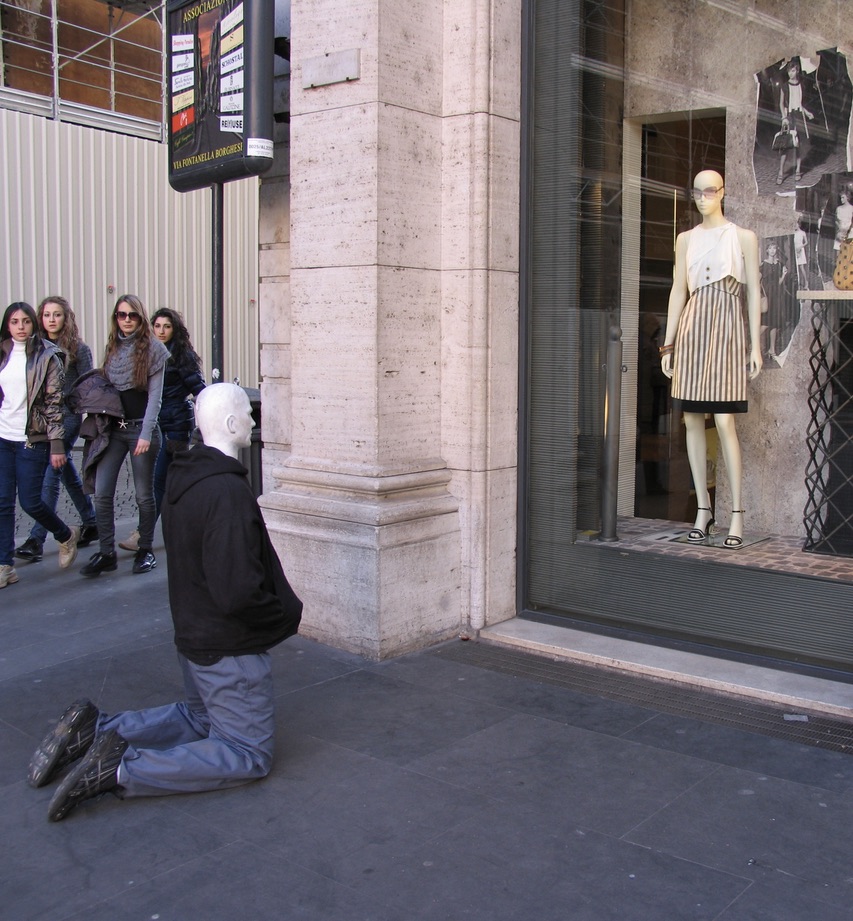
My first installation to interact with the window display mannequin was in 2012. I used a cheap styrofoam head and my own body on its knees as if worshipping the female mannequin behind glass. The focus was on her as if a goddess in her utopia behind glass.
In 2017 I was approached by Balenciaga to create work for a window display at Colette in Paris.
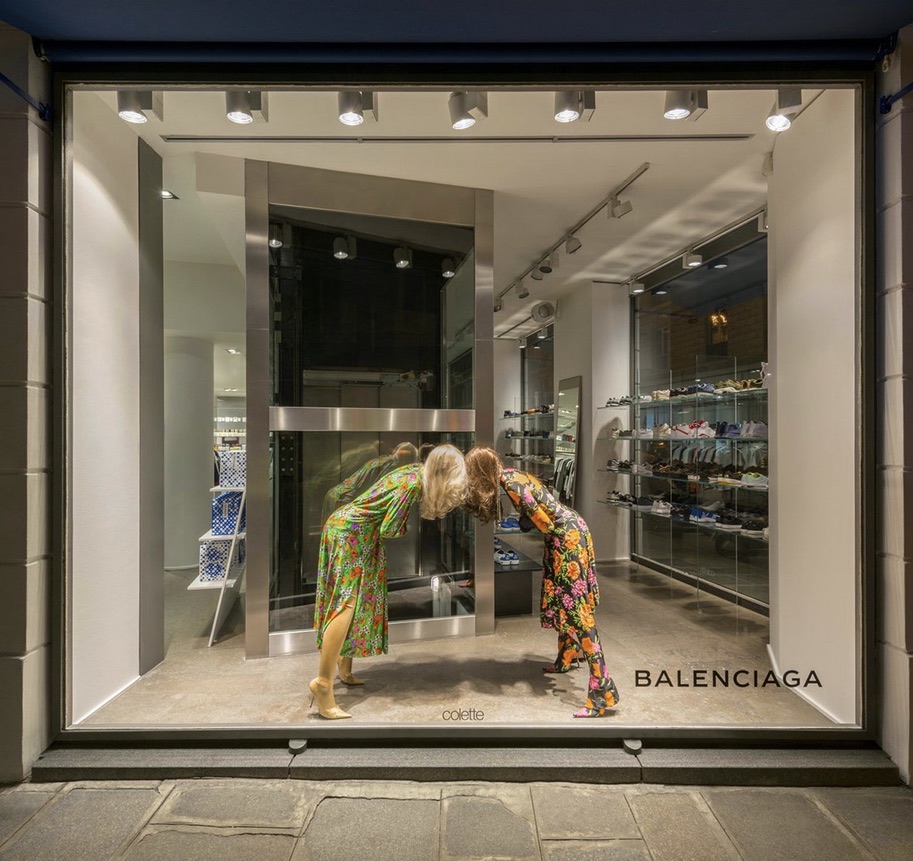
The public reaction from pedestrians was positive and led to a series of other pieces in new stores they were opening globally.
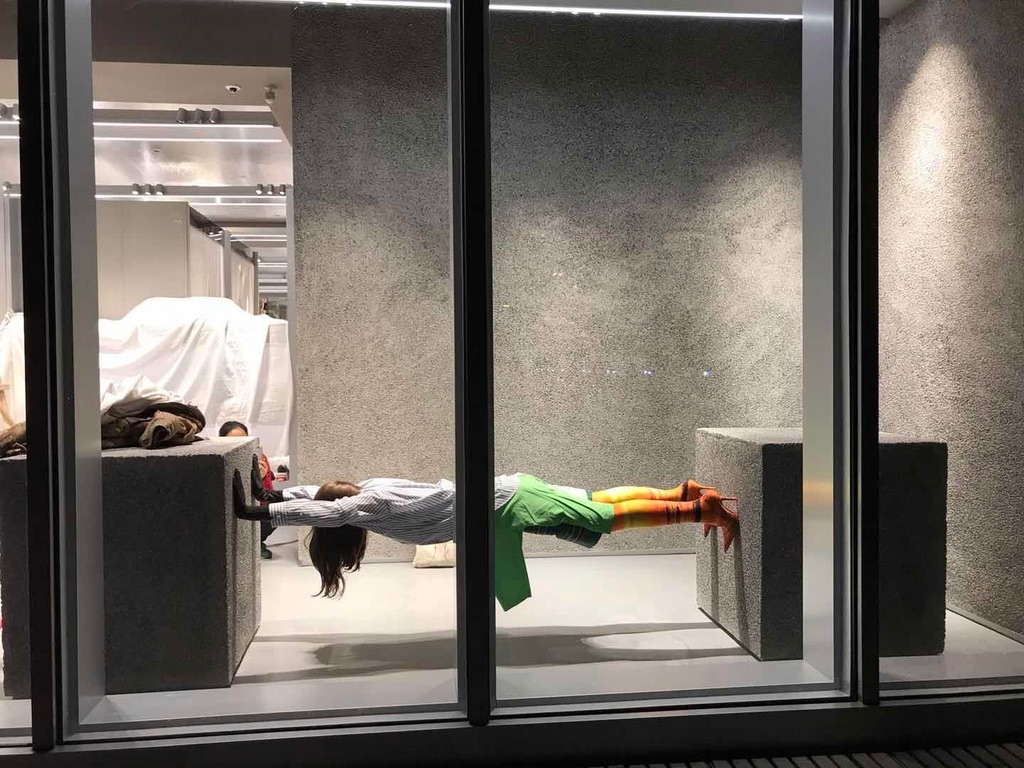
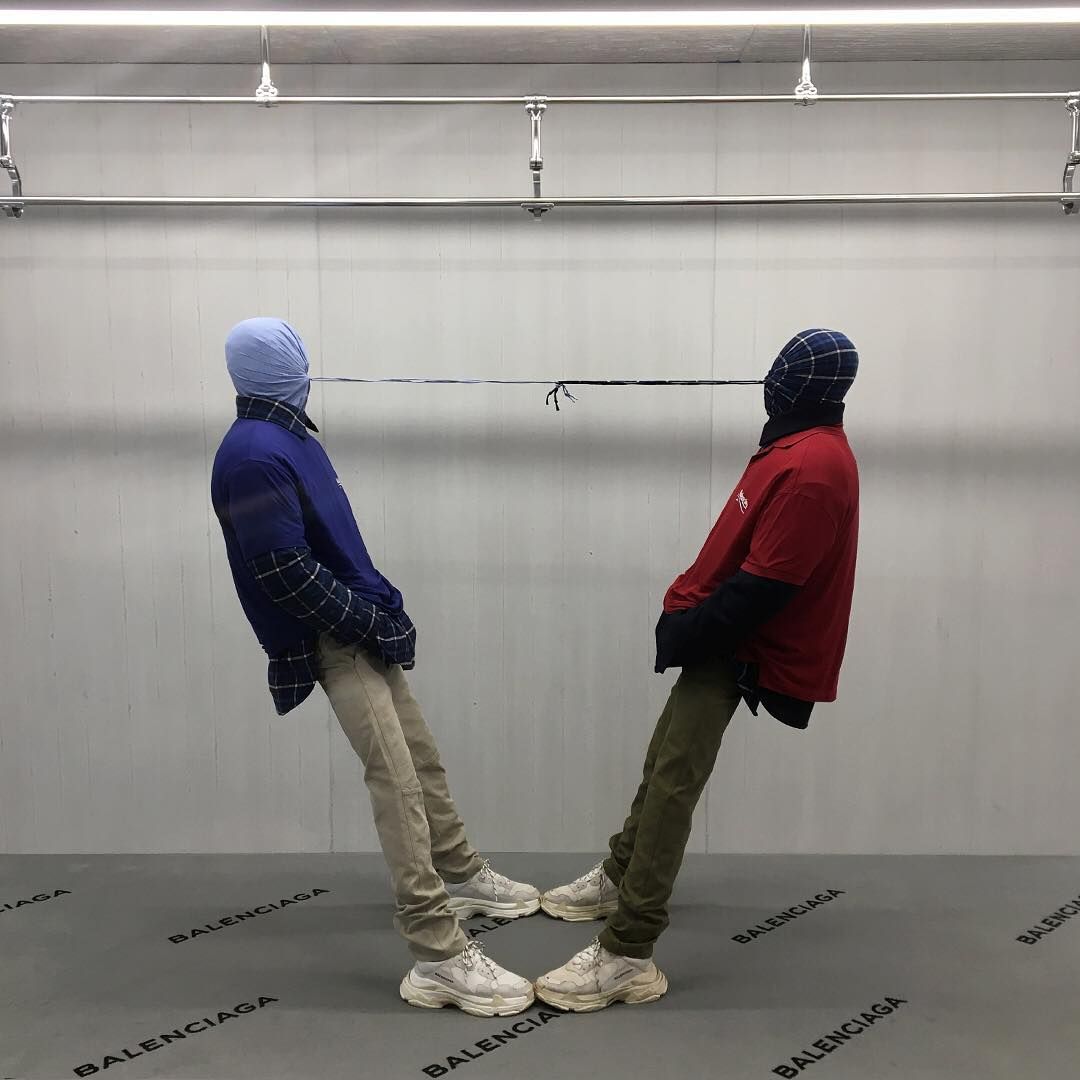
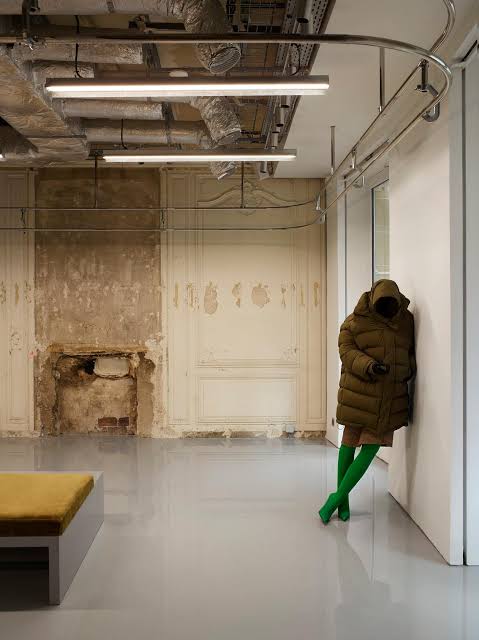
The culmination eventually took place at Selfridges, widely considered one of the most prestigious retail spaces in the world.
Installation
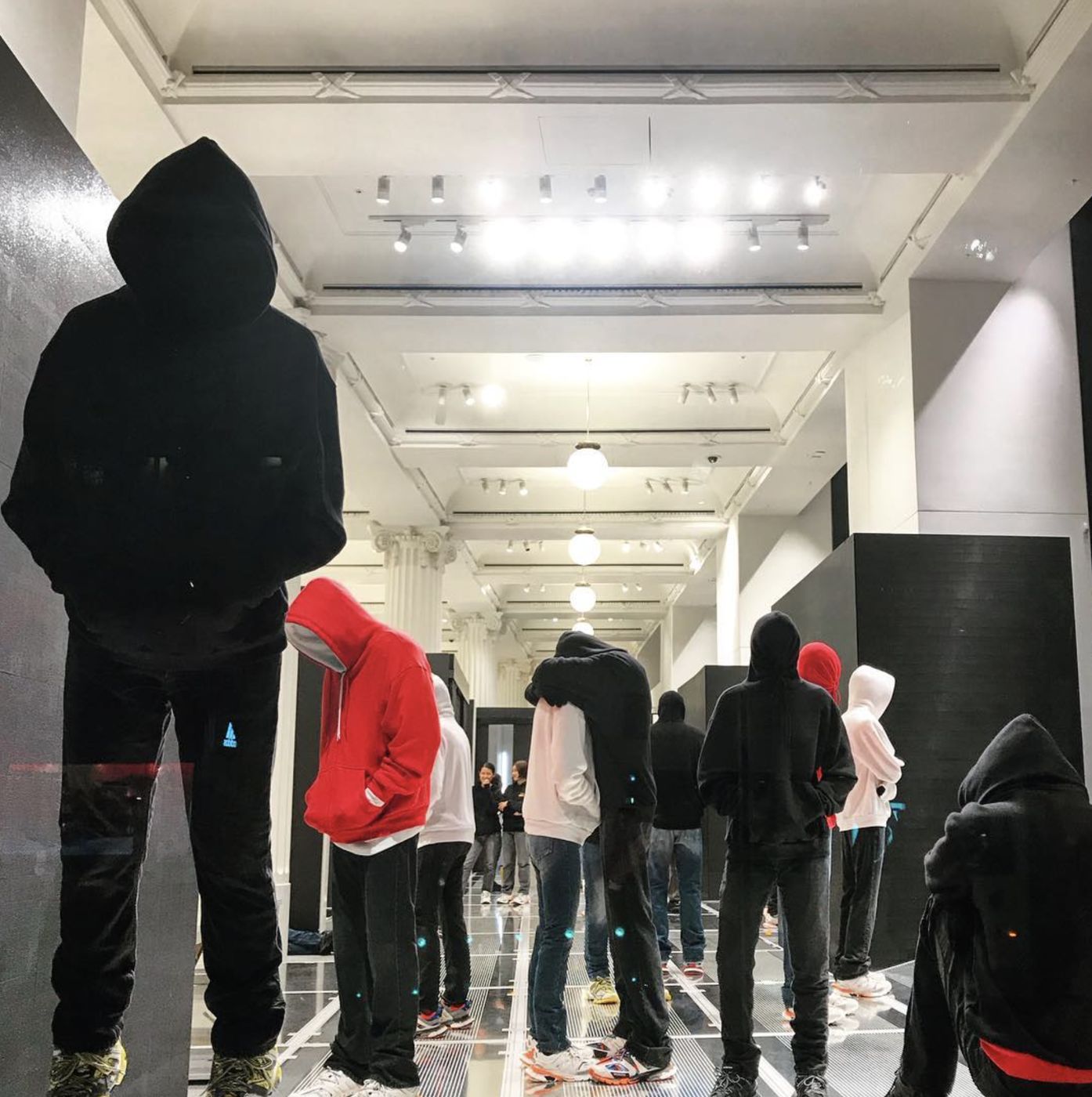
Eighteen hyper-realistic male and female sculptures were posed lifelike in static positions. There was a metal floor overlay and video screens. As it was a shoe release, there were also metal benches for trying them on.
Reaction
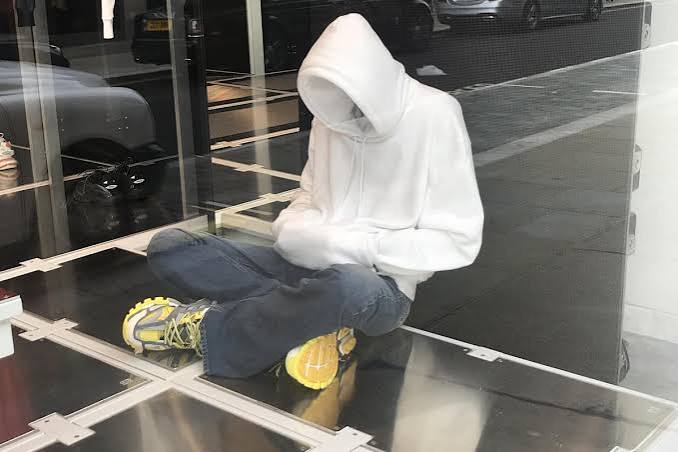
Shortly thereafter the Evening Standard ran the story, quoting a local council member who accused Balenciaga of mimicking a homeless person and called the window "a truly shallow reflection of consumerism." Balenciaga and Selfridges apologized for the misinterpretation, and the sculpture accused of looking homeless was moved away from the window further inward. This caused an international wave of online press on fashion websites.
Lens
The Embed virus that had knelt at a mannequin in Rome via the collaboration with Balenciaga was able to penetrate to the other side. While the criticism was unfounded, the idea that the “mannequin” was communicating to the street was in and of itself interesting. Pedestrians as blood cells in the veins passing through the shopping district were intended to be nourished by having something more stimulating to look at than the conventional bald faceless mannequin. That it worked too well is a testament to its success even though the accusation lacked a logical basis. The nervous system picking up the story that went global is not atypical for a brand like Balenciaga.
Conclusion
Interestingly some of the first mannequins were living. Women modeling for clients as far back as the 1850s were referred to as such. Likewise Selfridges in the early 1920s did a window display of living mannequins. In those early days, the mannequin was treated more of an art form and experience. As society moved to utility the mannequin lost this and became a blank humanoid made to become invisible to focus on the clothes. The Embed series breaching into that space into Colette was a reversal of that as well as the collaborations that followed. Because Selfridges was a shoe release the clothes weren't high fashion and what could have been more elaborate was closer to people milling about at an airport. Ironically the accusation that the figure looked homeless was a criticism of the body type of the model I cast for the figure.
Press:
Evening Standard
WWD
FashionUnited
Retail Gazette
The Architects' Journal
Full Glossary >>
More Case Studies >>